How much personal information does a simple DoorDash order reveal, and what can consumers do to protect their data privacy? Ordering dinner through DoorDash may seem like a simple transaction, but every search, click, menu view, and purchase creates information that digital platforms can use to understand consumer behavior. Tiffany Perkins-Munn explains how data collection begins long before customers place an order, with browsing activity, location information, payment details, and ordering patterns contributing to a larger picture of individual preferences and habits. She explores how businesses use this information through predictive analytics to improve recommendations, forecast demand, coordinate deliveries, and identify unusual transactions. However, she also emphasizes the difference between observing behavior and accurately understanding the circumstances behind it.
The article examines how recommendation algorithms influence consumer choices by determining which restaurants, promotions, and products receive attention. It also addresses important data privacy concerns, including sensitive location information, data sharing between service providers, security risks, and personalized pricing practices. While these technologies offer convenience, they also raise questions about transparency, consumer trust, and how personal information is used beyond its original purpose. Perkins-Munn encourages readers to become more intentional about their digital privacy by reviewing location permissions, adjusting advertising and data-sharing settings, and removing unnecessary stored information from their accounts. Ultimately, the article argues that consumers do not have to abandon convenient digital services to protect their privacy. Instead, developing stronger data literacy allows people to understand the information they exchange for convenience and make more informed decisions about their digital lives.
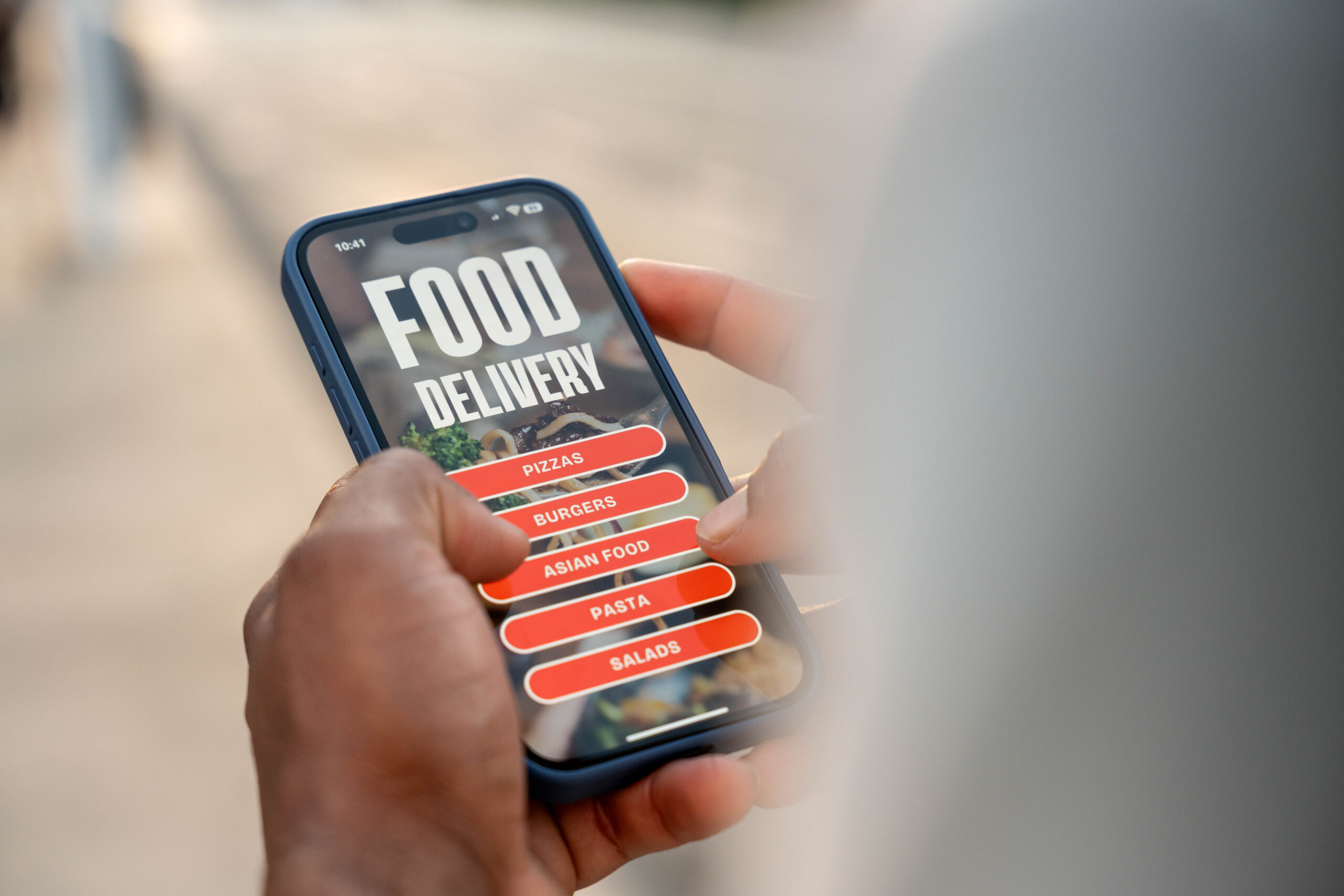
It’s Friday night. You’re tired, hungry, and have no interest in figuring out what to cook. You open up DoorDash and start looking for the perfect meal. You look at a pizza place you’ve ordered from before, scroll through a few menus, and change your mind twice. You end up searching for Thai food and notice a promotion. Good enough. You order dinner, start watching the map, and wait for your food.
All in all, that’s a pretty boring Friday night. You ordered dinner. But from a data perspective, quite a bit more happened.
DoorDash’s U.S. privacy policy states that its services may collect information including technical details about a device, the pages and features you browse, platform preferences, general location, and even precise device location when a user grants permission.
So what does that mean?
Well, the app likely knows where you are, which restaurants you looked at, and what you searched for. It knows what you ordered, how you paid, and all the little ways you interacted with the platform along the way.
As a data scientist, this fascinates me because it shows how easily we can separate an experience from the data behind it. We get that we’re providing an address when we request delivery. We understand that payment information has to be entered into the transaction. But we’re often less likely to think about the information created by our behavior while we’re deciding what to order.
That behavioral layer is where an ordinary Pad Thai order becomes an interesting data story. Understanding data privacy starts with learning to see that story.
What Data Gets Generated Before You Even Place an Order?
People generally think a transaction begins when money changes hands. But digital interactions often begin to generate useful information much earlier. Think about your typical in-app behavior. We’ll stick with DoorDash for our example.
You open up the app and search for “burgers.” Five restaurants pop up, and you do a quick scroll through each one. The first gets 30 seconds of your attention before moving on. You spend several minutes reading another menu. You click a promotion, but back out before ordering. You try searching for salads, but who wants that? You click back to the first burger listing.
You haven’t ordered anything, but you’ve produced a store of useful information about how you interacted with the platform. You didn’t volunteer anything, but your behavior generated information that the app can use. This is a hidden aspect of data collection that many people are just starting to recognize.
A delivery address is something you consciously and purposefully enter. Your name, payment information, and phone number all fall into that same general category. But behavioral information emerges through use. Consider DoorDash’s statement that it may automatically collect technical information about devices, as well as usage information such as pages visited and time spent browsing.
People tend to overlook that form of “passive” data collection. We’re very aware of the information we type into a box, but the information we create by clicking, searching, scrolling, or browsing is almost invisible. And the truth is, each of those actions, as a single interaction, has very limited meaning.
If you just look at one sushi restaurant, I can’t learn much about you. You might love sushi, but you might also be ordering for someone else. Or you could be curious about the menu. Only when a pattern appears over many visits does the information begin to matter.
That’s how data science works. Individual points become increasingly useful as they create connections and patterns over time. This is the data trail that starts well before you tap “Place Order.”
What Can a Dinner Order Reveal About Your Habits?
“Once you’ve given enough interactions to a system, the conversation around your data changes. “What happened?” is usually the easiest question to answer. “Why it happened” is much harder.”
Suppose an account regularly orders lunch to the same downtown address Monday through Friday. An analysis system might see this repeated pattern as linked to someone’s work routine. But it could also be a client’s office or a temporary project site.
The data shows the behavior, but the explanation needs context. The same idea applies to other patterns. Someone who often orders dinner at 10 p.m. might work late, care for a child, or attend evening classes. There are many reasons the data alone can’t show.
This distinction between observation and inference is at the core of responsible analytics. A data scientist can use repeated signals to estimate preferences or identify patterns. But the model still only sees a partial picture of the human being generating the data. That said, the partial picture is useful, even if it’s not perfect.
A company doesn’t necessarily need to know why you order tacos every Tuesday to learn that showing you a relevant discount on Tuesday afternoon might increase your likelihood of placing another order. That’s the point where psychology and analytics overlap.
“Human behavior contains patterns. Those patterns carry information. But people live and behave within circumstances that are constantly changing. Good analysis recognizes both realities.”
Why Does This Data Have So Much Business Value?
Once you see the trail, the business interest in it makes more sense. Food delivery is a complicated operation. The platform has to connect customer demand with available restaurants and delivery capacity. It’s estimating timing, processing payments, managing promotions, and identifying suspicious activity all at the same time. And on top of all that, it has to fulfill its primary purpose: helping people navigate an enormous number of dinner choices!
Data helps make that entire process easier. Order history can improve future recommendations. Location information determines which businesses can serve a customer. Delivery patterns lead to more accurate time estimates. From a business perspective, collecting this information is crucial for a simple reason: data helps reduce uncertainty.
If a company understands what customers tend to want and when they want it, it can make better operational decisions. Some information supports the order you’re placing right now. Other information helps the company plan for the order you’ll place in two days. The second category is called predictive analytics, and it can be extremely powerful.
Predictive analytics can help the system estimate which restaurants will be relevant during any given search or session. Patterns across an entire user base of orders can help forecast how busy any given neighborhood may be at any given time. Transaction behavior might help identify unusual activity that deserves additional review.
Having the data isn’t a problem in itself. What matters is how the information is used. Data privacy asks what information is needed and how far its use goes beyond the original reason for collecting it.
Are Your Food Recommendations Shaping What You Choose?
You open your app again next Friday. Before you even search for anything, two restaurants you’ve ordered from before pop up on the home screen. A promotion for Pad Thai catches your attention. Just below that, another Thai restaurant offers a “First Order” discount. You scroll and have to get past three other Thai restaurant listings before getting something different.
You’re still deciding what to order, but the context around that choice has been altered and organized. This is choice architecture, and it’s an especially interesting aspect of psychology and analytics. People don’t and can’t evaluate every possible option available to them. We make decisions based on what receives our attention. That means placement, familiarity, and the amount of effort required to identify an alternative are all contributing factors.
A recommendation algorithm is helpful because it reduces complexity. If you have hundreds of restaurants available, showing you a manageable set of tailored choices saves you time. And if those options are identified based on previous behavior, there’s a higher likelihood they’ll be relevant.
DoorDash says it may personalize content and features people see, along with recommendations and advertising. Each of those is a tool that helps shape your decision-making. They’re quite deliberately altering your choice architecture. That doesn’t mean every item you see has been selected specifically for you. Numerous factors can influence what appears, but the broader point is that the organization of choice can affect which options you consider.
This happens almost everywhere in our digital lives. We experience a recommendation as something that helps us find what we want. But over time, recommendations also define the set of choices we have in the first place.
Where Do the Real Data Privacy Risks Enter?
The more information organizations collect and connect, the greater the responsibility of maintaining it. This is something pretty universally agreed upon.
For example, the Federal Trade Commission has repeatedly treated precise geolocation as sensitive information. In enforcement actions involving location-data companies, the agency has expressed concern about information that could reveal visits to places such as healthcare facilities or houses of worship. A delivery address obviously needs to be precise enough to bring food to your door, and that same usefulness is why protecting that information matters.
“Data privacy risks take several forms. Personal information exposed through a security incident is one we’re all familiar with, but there are other ways data can be shared more broadly than a consumer may expect.”
Ordering dinner also illustrates this aspect of digital privacy that’s easy to overlook. One simple experience can involve many different, hidden organizations and systems. Think about that DoorDash order. The app needs to coordinate the transaction. The restaurant needs to know what to prepare. A delivery driver needs location information. A payment service has to process the purchase for the buyer, the delivery driver, the restaurant, and the app.
Think about how much information has to move between systems to make this work. That’s what data sharing really is. It’s not like in a police movie where someone hands over a big file. Instead, small bits of information move through a network, sharing just enough for each service to do its job. Privacy policies are made to manage these filters every day.
Data can also find uses that feel exploitative from the interaction that generated it. The FTC’s work on surveillance pricing provides examples of how data companies use information such as location, shopping history, and web interactions to help businesses tailor pricing in the moment. No one would willingly share their information in order to be charged more for a transaction based on who and where they are.
These are all examples of why trust has to be at the center of data privacy. It can’t simply be about how much information a business can collect. They have a responsibility to share why they need it and prove that they deserve to keep it.
What Can You Do to Protect Your Data Privacy Without Giving Up Convenience?
I don’t know about you, but I don’t plan to stop ordering food because digital services generate data.
“Convenience has value. But so does understanding the exchange we make to receive it.”
A few minutes spent looking through privacy and account settings in the apps you frequent can help you make those choices more intentionally.
Start by checking location permissions. Decide if an app needs access all the time or only when you’re using it. Your phone’s system lets you control many of these settings. Next, look at the app’s privacy settings. Choose how you want to handle data sharing and targeted ads based on the options available.
Check what you have saved in each account. Do you need every delivery address stored in the app? Are there old payment methods still saved? Have your preferences or settings stayed the same even though you use the service differently now?
These are all questions about account security and data privacy. More broadly, they’re about data literacy. You don’t need to read every privacy statement before ordering dinner, but you should know enough to notice when your information is being used or shared and decide if those settings work for you. Defaults are choices someone else made. Understanding data lets you decide for yourself.
Do You Understand the Trade Behind the Convenience?
So, let’s revisit Friday night one more time. You wanted dinner, and a few taps connected you with a restaurant, processed a payment, coordinated a delivery, and brought food to your front door. What a time to be alive.
But the experience feels simple because most of the complexity happens behind the scenes. Data makes this possible. Your location allowed the delivery, your browsing history improved recommendations, and your actions created information that stays valuable long after you finish your meal.
Don’t ask yourself if your dinner is worth your data. That turns a very nuanced exchange into a black-and-white decision. A better question is whether you understand enough about the information you’re sharing to decide whether the exchange is worth it to you. That’s what data literacy gives us.
Once you begin to see the data trails left by your daily digital interactions, technology becomes easier to evaluate on your own terms. And in today’s world, that trail begins with something as ordinary as deciding what you want for dinner.
Frequently Asked Questions (FAQs)
1. Do apps collect data before you place an order?
Yes. A data trail can begin before checkout. Browsing restaurants, searching for cuisines, viewing menus, clicking promotions, and spending time on certain pages can all generate behavioral data. A data scientist may use repeated patterns in this information to better understand customer preferences and behavior.
2. What is the difference between personal data and behavioral data?
Personal data often includes information you provide directly, such as your name, address, phone number, or payment details. Behavioral data is created through your activity, such as what you search for, which restaurants you browse, how often you order, and when you use the app. Both can play a role in data privacy.
3. Do recommendations influence what customers order?
Recommendations can influence which restaurants or meals receive attention by organizing and prioritizing the choices users see. Previous behavior, location, availability, promotions, popularity, and other factors may all affect what appears in the app. Recommendation systems can make choosing easier while also shaping which options customers consider first.
4. What are the main data privacy risks with apps?
Potential data privacy risks can include exposure of personal information through a breach, misuse of location data, unwanted profiling, inaccurate behavioral inferences, excessive data sharing, or retention of information longer than necessary. The level of risk depends on how information is collected, protected, shared, and used.
5. How can you protect your data privacy when using mobile apps?
Review location permissions, explore privacy settings, remove saved information you no longer need, use strong account credentials, and learn which privacy rights apply where you live. You do not need to become a data scientist to make informed decisions. Data literacy starts with understanding what information you are sharing and whether the convenience you receive feels worth the exchange.